
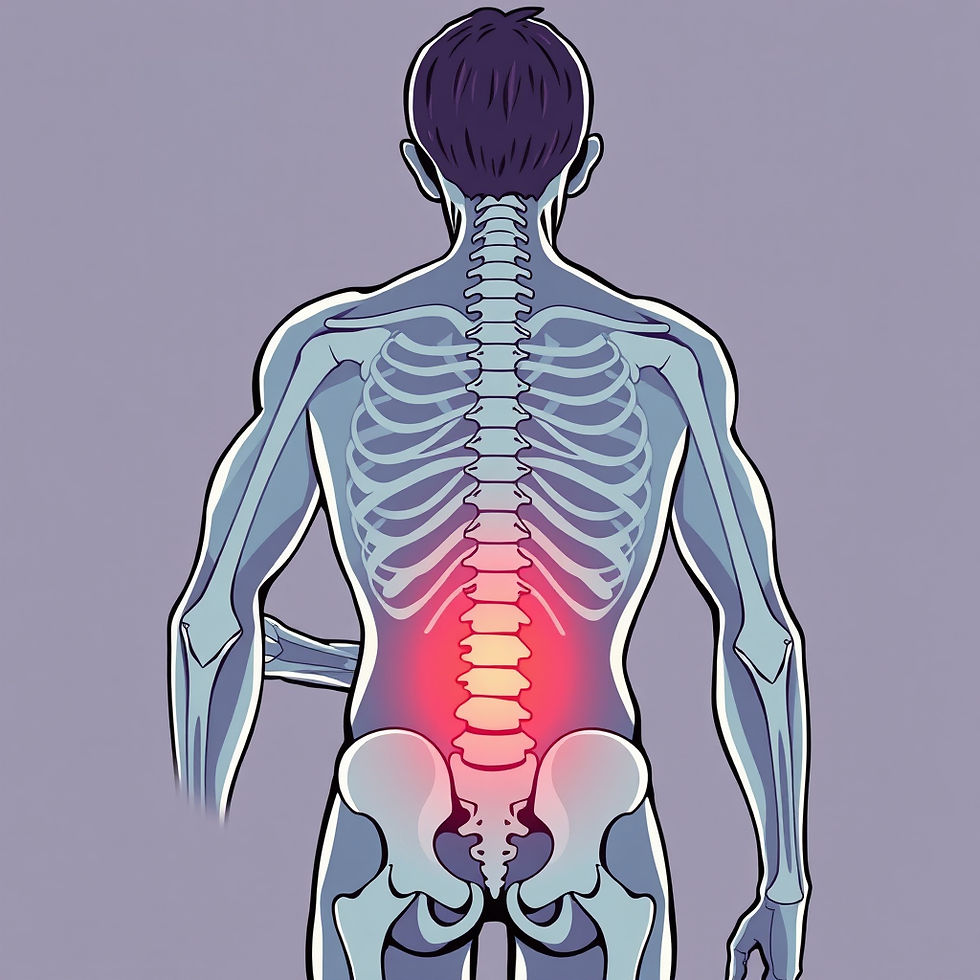
Lumbar disc herniations in car crashes
Disclosure:
Medical Disclaimer: The content shared in this podcast is not intended to be a substitute for professional medical advice, diagnosis, or treatment. Always seek the advice of your physician or other qualified healthcare provider with any questions you may have regarding a medical condition. Never disregard professional medical advice or delay seeking it because of something you’ve heard on this podcast.
Legal Disclaimer: Similarly, the legal information provided is not a substitute for legal advice. Laws and regulations can vary widely by jurisdiction, and the application of the law depends on the specific circumstances of each situation. Please consult a licensed attorney for personalized legal advice pertaining to your case.
Welcome back to the Forensic Chiropractor podcast.
In my practice I see patterns in my patients who have been in MVCs and failed to make a full recovery. Those that fail to get better often have one of the following: disc damage, ligament damage, mild traumatic brain injuries, tendon or labral tears. Although there are more permanent injuries these are the ones I see often in my practice.
Today’s study will cover lumbar disc herniations. This is not new to my podcast. I have covered a lot of studies regarding disc damage. I have not talked as much about treatment for disc herniations. Today’s study is Prediction of Lumbar Disc Herniation resorption in symptomatic patients: a prospective, multi-imaging and clinical Phenotype study by Alexaner Hornung et al. This study was published in the Spine Journal in 2023.
The take away for me in this study was that they want to understand an individual’s risk profile to tailer treatment for a substantial clinical impact. This type of study is likely how we will view patients in the future. What can we learn about patients and how they will respond to different treatments. They wanted to know what type of patients with lumbar disc herniations will respond to conservative treatment or the ones that will respond to surgery.
For this study they took 93 patients with new lumbar disc herniation causing radicular or leg symptoms. All of these patients were treated conservatively at the same clinic and by the same provider. The conservative care was gabapentin, acupuncture and avoidance of anti-inflammatory medication. I want to spend some time in a minute discussing my thoughts on this type of conservative treatment.
They assessed these patients to see if they could find factors that patients had that allowed for the disc herniations to resorb. They did repeat MRIs every 3 months over a course of 1 year. Their study showed that a certain percentage of patients with disc herniations and radicular symptoms became symptom-free in 3 months. The group of patients that got better had no significant differences with height, weight, smoking status, age or gender compared to those that did not get better.
They found 3 factors that were seen in the group of patients that had disc resorption and symptom free at 3 months. They found that larger L4 posterior vertebral height, larger sacral slope and larger initial herniated volume all contributed to early resorption at 3 months.
Having a large posterior vertebral height likely is an indication of no degenerative changes and a healthy spine at that level. The lack of degenerative changes would indicate to me that the biomechanics of the spine at this level are healthy and normal mechanical function is very important process with disc healing.
Sacral slope is an important factor in biomechanical function. Often after disc herniations the mechanics of the spine are dramatically altered. Those with a greater sacral slope showed better recovery at 3 months.
Larger disc herniation’s look scary. They look like they would take the most time to resorb and become symptoms free. This has not been the case in multiple studies I have read. The larger disc herniations seem to resorb better. The problem with larger disc herniations would be nerve compression. If the disc herniation is so large that it is compressing a nerve root or spinal cord then we have the need for urgent surgery.
This study showed that 24.7% of these patients had early disc resorption at 3 months. They showed that the majority of disc damage will improve in 3-6 months with conservative care. They reported that quote “Surgical intervention is generally reserved for patients with progressive neurologic deficit caused by critical nerve root compression, or those with recalcitrant symptoms” end quote. They reported that regardless of surgery or conservative treatment patients who have experienced symptoms for over 6 months are known to have inferior outcomes.
With disc herniations time is important. We have 6 months to get someone feeling better or they typically have worse outcomes. I know patients with chronic pain will have changes to their brains and this may be part of why they fail to make a good recovery. That is why this study is so important. If we can determine if a patient needs conservative care or surgery, we can accelerate the process and attempt to avoid inferior outcomes.
Their study showed that the majority of patients with lumbar disc herniations will have self-healing or resorption of the herniated disc within a year. They showed that if the symptoms last over 6 months they will have worse outcomes. Rarely is surgery needed for disc damage unless there is nerve compression, spinal cord compression or failure with conservative care.
The body has the ability to heal from many conditions if given the proper environment. The healing process is typically mediated through blood flow. Blood will bring nutrients in and take waste material out. Discs do not have a direct blood supply. The nutrients and waste material are transported through fluid surrounding the disc. This is mediated through movement. Normal mechanics of the spine will help with disc healing.
In this study they used gabapentin to help with radicular pain. They also used acupuncture. I do a lot of acupuncture in my office and have had great results with disc damage. I believe acupuncture is very effective at managing pain especially nerve pain. They had patients avoid anti-inflammatory medications. Anti-inflammatory agents can help with pain, but they will slow the healing process. In my opinion their treatment protocol for disc herniations was to manage pain with gabapentin and acupuncture and allow time to heal the disc.
I believe that chiropractic care is uniquely positioned to manage disc herniations if there is no nerve root or spinal cord compression. Restoring normal biomechanical function around a herniated disc will increase the healing process by bring in more nutrients and removing waste. A chiropractic adjustment can help manage the biomechanics and help manage pain. This allows for the healing process to take place. Mechanical decompression of the spine is another tool I have found helpful with disc damage. Traction of the spine alone is not enough to help with disc herniations. Spinal mechanical decompression is a traction on the spine, but in a pumping mechanism. There will be a stretch followed by a short release of the stretch and this process is repeated. This mechanical decompression can be very beneficial with both an increase in movement around the disc allowing for nutrients to be delivered and waste to be removed and also a relief of any nerve abutment and symptoms. Low level laser therapy includes a laser light that has the ability to travel deep in the tissues and bring a specific light frequency. They have found that all human cells have receptors for light. At the right light frequency, the cells have been shown to increase ATP production. ATP is the energy of a cell and can accelerate the healing process of damaged tissues.
My treatment process for disc damage is designed to allow the body to heal and resorb the herniated disc. When safe I will adjust patients, do spinal decompression, laser therapy and acupuncture. I have found that this is effective for many of my patients. I know it is important to get them feeling better as soon as possible to prevent chronic pain. Of course, not all patients will respond to my treatment and surgical consultations will be needed.
I want to stress the importance of surgical decompression. If a nerve root or spinal cord is being compressed the patient will need an urgent surgical evaluation. The compression of nervous tissue can lead to permanent nerve damage.
Today’s study has some great insights. As a recap this study showed some patients will have resorption of disc herniations and reduction of symptoms within 3 months. This is seen with 24.7% of patients. They showed that 67% of these patients will have resorption within 1 year. The patients that do not have symptoms reduction in 6 months will have inferior outcomes regardless of treatment type including surgery.
They were able to show 3 things that can predict those patients that will get better in 3 months. The 3 things are large posterior L4 vertebral height, larger sacral slope and greater herniated material. For me one of the most important parts of this study is what I covered at the beginning. They want to understand an individual’s risk profile to tailer treatment for a substantial clinical impact. If we know what type of care patients will respond to best, then the patients will have better outcomes. Although I think this study has a lot of helpful information, we will need a lot more research before we can better predict the care a patient will respond to best.
Today’s study talks a lot about resorption of disc material and decrease in symptoms. This study makes me as a reader think that if the disc material resorbs that we have a complete healing of the disc. As I have discussed in prior podcasts once a disc herniates this will always be a permanent injury.
Once a disc herniates the disc will lose height over time. This loss of disc space will alter the mechanics of the vertebra above and below. This altered function will lead to degenerative osseous changes over time. This altered function will place an increased load on the facet joints often leading to inflammation. The disc will attempt to heal and this is done through different growth factors. These growth factors will increase the innervation or nerve supply of the disc. There will now be nerves in the center of the disc which is an area that should never have nerves. As seen on prior podcasts if we have nerves in the center of the disc the patient will have the potential to feel pain with normal activities. Yes, conservative care is effective for disc herniations the vast majority of time and when appropriate surgical intervention is needed. Either way the patient will have a permanent injury.
Real World
One day, I need to do a podcast on the effects of chronic pain on the brain and body. Chronic pain is not good for the body. Today’s study showed that patients who have lumbar disc herniations and do not have resorption of the herniated material within 6 months have inferior outcomes. I remember in school we were taught that discs will take up to a year to heal. The lesson learned for me is that although it may take a year for patients to have disc resorption and healing 6 months should be our target to get them out of pain.
This shows the importance of collaborative care. Conservative care can be great and affective for a majority of patients. When conservative care is not enough to get them out of pain in 6 months referrals should be made. I see a lot of my patients unwilling to be referred beyond conservative care. There are a lot patients that are unwilling to take pain medication, have steroid injections or consider surgery. A lot of my patients have a much more conservative approach.
Although I always recommend starting conservatively there will just be some patients that do not respond. I think this study is important to explain that if we are unable to manage the pain within 6 months the outcomes will be inferior. If conservative care fails to make progress or is stalling out, I think that is the time to make a referral. Often pain medication or steroid injections can decrease the pain and complement my treatment well. Some patients will respond very well to surgery for disc herniations, but it is likely important to have a surgical consultation within 6 months.
Thanks for listening to the podcast. Please reach out if you have any questions or topics you would like me to cover. Remember to subscribe so you don’t miss out on any future medical legal research.


Comments